
The Arosa Village Walking Tour: Walser Heritage, Alpine Lakes, and 500 Years of Quiet History
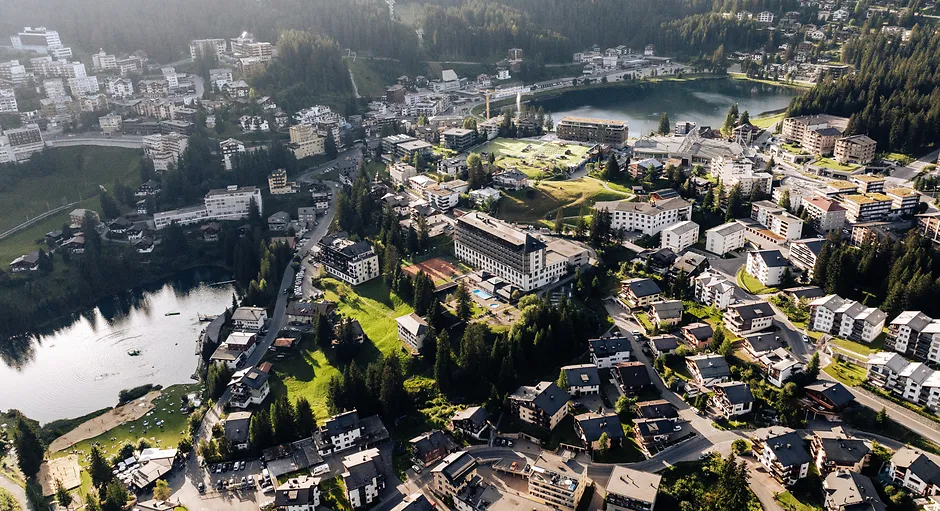
The road ends here. So does the railway. Arosa sits at the top of the Schanfigg Valley in Graubünden, and there is nowhere further to go; the village simply stops where the mountains begin. That dead-end geography shapes everything about a walk through Arosa. There is no through-traffic, no transit noise, no sense of being on the way to somewhere else. You are here, at around 1,800 metres, in a small mountain community of several thousand residents, with clean air and an unusual quiet that settles in quickly once you start moving on foot.
The Arosa village walking tour is a gentle, self-guided circuit that takes one to two hours depending on how often you stop. It is flat to gently undulating, requires no special fitness, and covers some of the most historically layered ground in the Swiss Alps. The route connects lakeside promenades, traditional Walser timber houses, a mountain church dating from around 1492, and a small local history museum. No guide is needed. No fee is charged. All you need is comfortable shoes and some willingness to look closely at what's around you.
Innerarosa and the Walser Houses
The best place to start is Innerarosa, the oldest quarter of the village. This is a Walser settlement; the community traces back to the Walser migrants who moved into high Alpine valleys during the medieval period, clearing land and building with the materials they had: stone for foundations, timber for everything above.
What survives in Innerarosa is remarkable. The original timber houses still stand, darkened by centuries of weather, with inscribed blessings carved under the gables. These weren't decorative choices. They were prayers, written into the wood to protect the household. Some date back several hundred years. The traditional pasture fencing between the houses remains as well, giving the neighbourhood a distinct agricultural texture that feels genuinely different from the resort architecture further up the valley.
Walk slowly here. The details reward patience: the way the timber joints fit, the slope of the rooflines designed to shed heavy snow loads, the narrow lanes between buildings that were scaled for people and livestock rather than cars. Innerarosa is a living example of medieval Alpine settlement patterns, and the fact that it sits within a modern ski resort makes it all the more surprising.
The Eggahuus Museum
Before you leave Innerarosa, visit the Eggahuus. This local history museum opened in 1949 and is housed in one of the traditional buildings. It is small but informative, and spending twenty minutes here changes the rest of your walk. The collection covers Arosa's Walser heritage, the transition from farming community to climatic spa resort, and the arrival of tourism in the late 19th century. Understanding that Arosa was originally valued for its air (the German term is "Luftkur," meaning air cure) gives the simple act of walking through the village a richer dimension. You are not just sightseeing; you are doing what visitors have come here to do for over a century.
The Old Church Path and the Bergkirchli
The old church path is one of Arosa's most beautiful and meditative routes, and it is easy to miss if you don't know to look for it. The trail traces the footsteps of past villagers walking to Sunday services, winding uphill through spruce forest to the Bergkirchli.
The Bergkirchli is the oldest building in Arosa, a small mountain church built around 1492. It is a listed heritage site, and one of the oldest wooden churches in all of Graubünden. Inside, the space is modest: low ceilings, plain wooden pews, the quiet that comes from thick walls and centuries of use. Most casual visitors never make it here, which is precisely what makes it worth the detour. On a weekday morning you will likely have it entirely to yourself.
The walk up takes perhaps fifteen minutes. The path is short but atmospheric, shaded by old trees, with a noticeable shift in sound as you leave the village behind. Even birdsong seems to register differently here. It is a pilgrimage-like experience; not religious necessarily, but contemplative in the way that walking toward something old and purposeful tends to be.
The Lakeside Walk: Obersee and Untersee
The village lakes are the other essential stop on the circuit. Obersee and Untersee sit at the valley floor, connected by flat, accessible paths that are suitable for pushchairs, wheelchairs, and anyone who wants a completely level stroll.
The best time is early morning. Before the afternoon breeze picks up, the water surface goes perfectly still, and the surrounding peaks reflect with photographic clarity. On a calm day in June or July, the mountain lake reflections here are among the most photographed scenes in the Swiss Alps, and it is easy to see why. The symmetry is almost disorienting: sky above, sky below, and the village suspended between.
Even on windier days, the lakeside paths have a particular quality. The light shifts constantly over the water. Ducks move between the reeds. Squirrels (Arosa's are famously bold) dart across the path, often pausing to investigate walkers with a directness that delights children and adults alike. A full loop around both lakes adds perhaps thirty minutes to your walk and is always worth the time.
Walking the Village in Winter
The same circuit takes on an entirely different character between December and March. Snow compacts on the village paths, and the crunch underfoot becomes the dominant sound. The timber houses of Innerarosa look even more striking against white; smoke rises from chimneys, and the inscribed gable blessings become easier to read against snow-dusted wood.
The lakes may be partially frozen. The Bergkirchli path requires sturdy boots with good grip, but the route stays accessible throughout the winter months and the solitude is even deeper. There is a meditative quality to winter walking in Arosa that the summer version, lovely as it is, cannot quite replicate. The cold keeps your attention close. Your breathing steadies. The pure mountain air at this altitude feels sharper, cleaner, almost tangible on your skin.
After a winter village walk, the transition back to warmth is part of the pleasure. A session at the spa arosa pairs naturally with the slow cooling and rewarming that makes winter walking so satisfying.
Extending the Walk
The village circuit is complete on its own, but several extensions are worth considering. The nearby Walser settlement of Sapün is accessible as a short addition and offers an even more remote glimpse of the same building traditions found in Innerarosa. Themed hiking routes extend from the village in summer, including a legend hike and the forest trail from Litzirüti to Arosa with views of the Schiesshorn massif.
Families with children will find the Arosa Bear Sanctuary (Bärenland) a natural companion to the village walk. It is located a short cable car ride from the village centre and makes for a full morning when combined with the lakeside stroll.
The Rhaetian Railway journey from Chur to Arosa is itself worth mentioning. The train climbs through 365 curves, over bridges spanning deep gorges in the Schanfigg Valley, and arrives at the end of the line: Arosa station. If you can, arrive by train. The approach sets the tone for everything that follows.
Practical Details
The Arosa village walking tour is free, self-guided, and accessible year-round. Pick up a village map from the tourist information office near the train station to identify historic buildings and points of interest along the way.
Duration: One to two hours for a leisurely circuit, depending on stops.
Difficulty: Easy. Flat to gently undulating paths suitable for all ages and fitness levels.
Footwear: Comfortable walking shoes in summer. In winter, sturdy boots with grip; village paths can be compacted snow or ice.
Best light: Morning. The lake reflections are at their sharpest before noon, and Innerarosa catches soft, warm light in the early hours.
Weather note: Even for village walks, mountain weather at 1,800 metres can shift quickly. A light layer and rain jacket are worth carrying in summer. In winter, dress for sustained cold rather than exertion; the pace is slow and the air is sharp.
The village walking tour is one of the quieter experiences arosa offers, but it is often the one guests mention when they return. There is something about walking through a place at this pace, noticing the carved blessings on a 400-year-old house, hearing nothing but your own footsteps and the occasional bird, that stays with you longer than you expect. Arosa has always been a place people came to for the air. Walking through the village, you understand why.
Guests staying at Hotel Altein are ideally placed to explore the village on foot. The hotel's central location in Arosa means that Innerarosa, the lakeside paths, and the old church trail are all within easy walking distance, making it simple to step out the door and begin the circuit at whatever pace the morning suggests.
Frequently Asked Questions
What is the Arosa village walking tour?
It is a gentle, self-guided circuit through Arosa at around 1,800 metres. It connects lakeside promenades, traditional Walser timber houses, a mountain church, and a small local history museum. No guide is needed and no fee is charged.
How long does the walk take and how difficult is it?
It takes one to two hours depending on how often you stop. It is easy, flat to gently undulating, and suitable for all ages and fitness levels. You need comfortable shoes in summer and sturdy boots with grip in winter.
What are the main highlights along the route?
Innerarosa is the oldest quarter, with original timber houses and inscribed gable blessings. The Bergkirchli is the oldest building in Arosa, a small mountain church built around 1492. The Eggahuus local history museum, opened in 1949, covers Arosa's Walser heritage.
Can I do the village walk in winter?
Yes, the route stays accessible throughout the winter months. Snow compacts on the paths and the timber houses of Innerarosa look striking against white. The Bergkirchli path requires sturdy boots with good grip.
Where do I start, and how convenient is it from Altein, Arosa?
Pick up a village map from the tourist information office near the train station. Guests at Altein, Arosa are ideally placed to explore the village on foot. Innerarosa, the lakeside paths, and the old church trail are all within easy walking distance of the hotel's central location.