.webp)
The Arosa Card: what is actually included
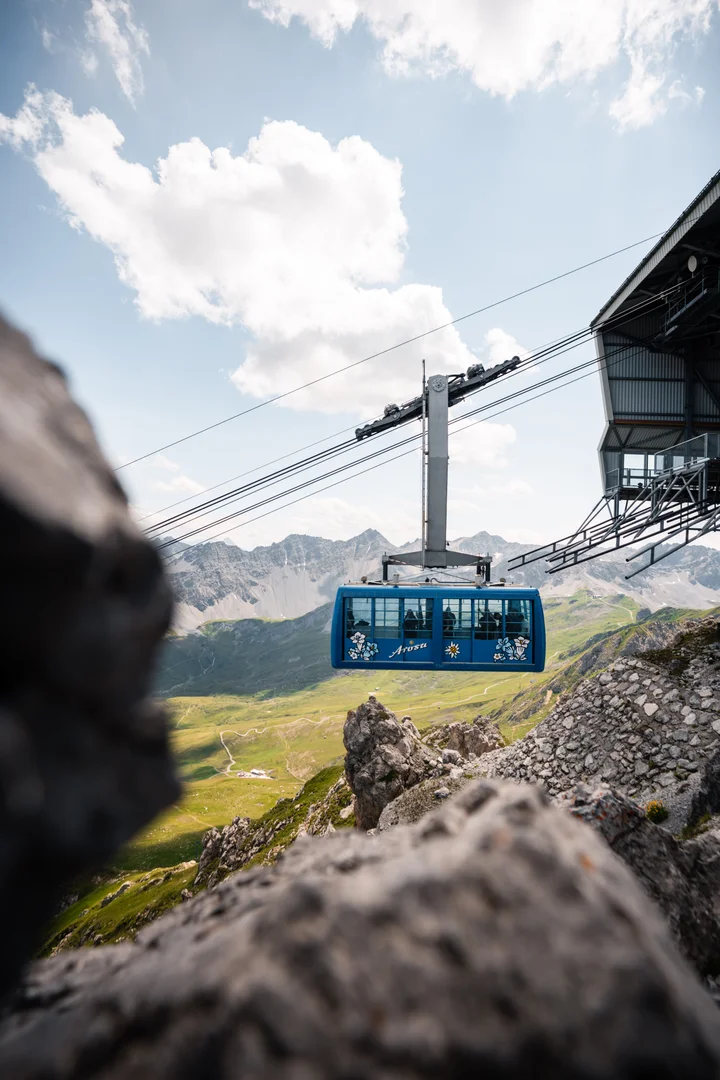
Stay one night in Arosa and you are handed a guest card that pays for itself before lunch on day one. The Arosa Card is issued to every overnight guest in the village, it costs nothing extra, and in summer it covers the cable cars, the local buses, the train down the valley and a long list of sports and cultural venues. It is also widely misunderstood, because the inclusions are set fresh for each season and because the card behaves very differently in summer than in winter. Here is what it actually covers, how you receive it at Hotel Altein, and where its limits are.
What the Arosa Card is
The Arosa Card is the destination guest card for Arosa, funded through the Beherbergungsabgabe, the accommodation levy that hotels, holiday apartments and campsites pay per room or per square metre. Because the levy sits with the accommodation provider rather than on your bill as a nightly per person tax, the card reaches you at no separate charge. German speaking guests searching for the kostenlose Arosa Card, or for arosa card inklusive, are looking for exactly this: a card that is genuinely free to the guest and included in the stay.
It is not a discount booklet. Most of what it covers is full access rather than a reduced rate, which is why some guests describe it as an arosa all inclusive card. That description is close but not exact, and the exceptions matter, so they are set out further down.
How you get the card
Responsibility for issuing guest cards sits with the accommodation provider, so at Altein, Arosa you receive yours at reception when you check in. There is nothing to apply for and nothing to buy.
Digital or printed
The card is issued digitally by email, saved to a mobile wallet, or printed on paper if you prefer something physical. Each card carries a QR code, and that code is what gets scanned at cable car turnstiles and at partner venues. Keep it on your phone screen or in your wallet rather than buried in an email thread, because you will use it several times a day.
What reception needs from you
Card issuance requires first name, surname, nationality, postcode, town and age category for each guest, including children. Registration at check in is faster if you have those details ready for the whole party. Details for the current season are published on the Arosa Card page for Hotel Altein.
What the Arosa Card includes in summer
Summer is where the card does its heavy lifting. The list below reflects the summer 2026 season as published by Arosa Tourismus. Inclusions are reset every season, so treat this as the shape of the offer and check the official Arosa Card page for the current season list before you travel.
Mountain railways
The headline benefit, and the reason the search term arosa bergbahnen inklusive exists, is free travel on the open Arosa cable cars according to their published timetables. For summer 2026 that means the Arosa to Weisshorn aerial cableway across both sections, the Hoernli Express gondola and the Urdenbahn from Hoernli across to Urdenfuerggli. Opening dates are staggered: the first section of the Weisshorn cableway ran on the weekends of 30 and 31 May and 6 and 7 June 2026, both Weisshorn sections went into continuous operation on 13 June 2026, and the Hoernli Express started on 27 June 2026.
Trains and buses
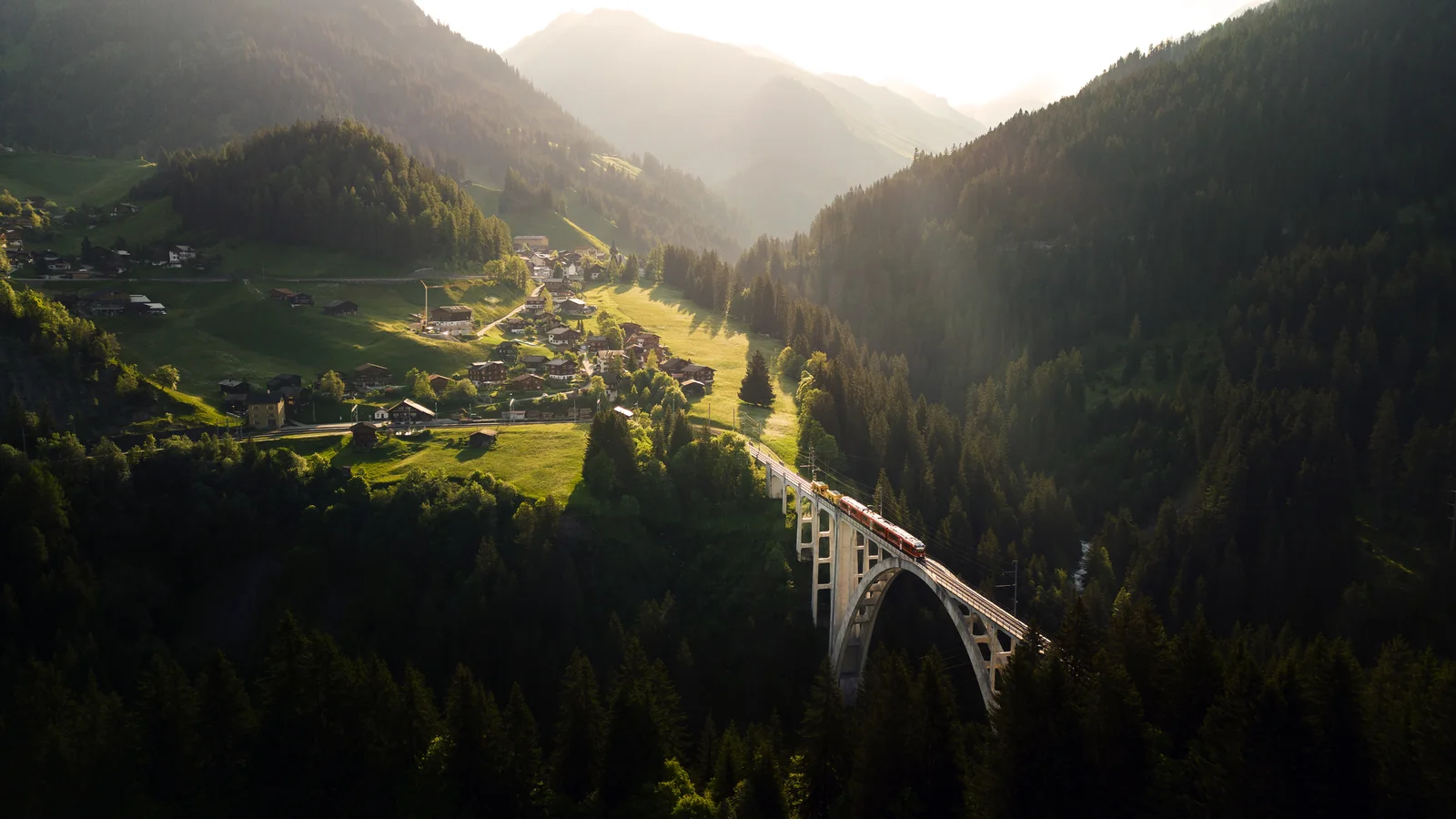
The card covers the Rhaetian Railway between Arosa and Lueen Castiel, which is the scenic stretch of the Chur to Arosa line, plus the local bus service around the village. Arosa is not car free, so buses genuinely are the practical way to move between the lake, the village centre and the valley stations without repeatedly moving your car.
Sport and leisure
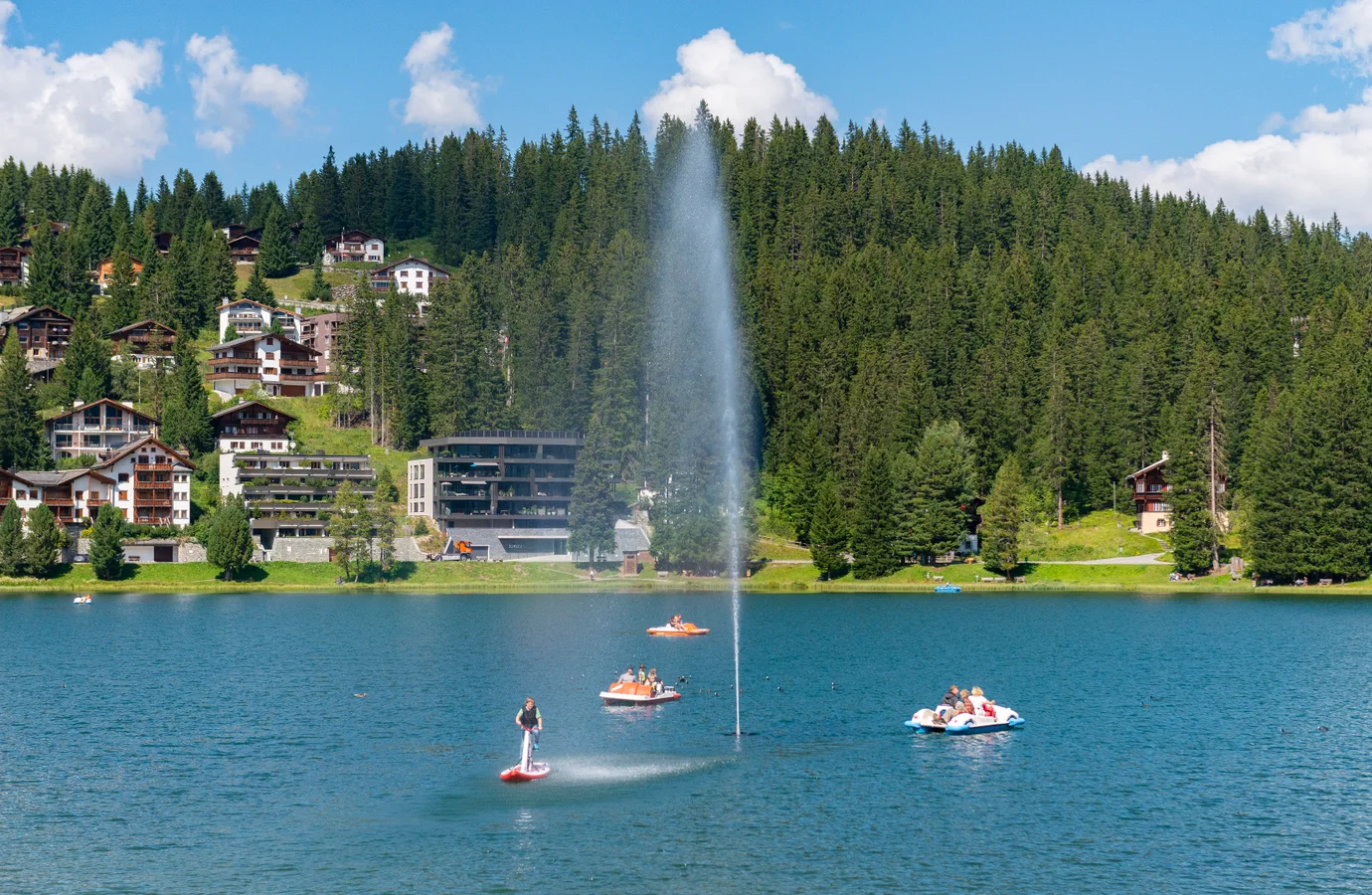
Included venues for summer 2026 are the rope park and skill centre according to their season times, pedalo and boat hire on the Obersee, the Untersee lido, the ice hall and the golf driving range. ChippinGolf joined the list from 14 June 2026. Two details save an argument at the counter: equipment hire at the rope park is not part of the card, so cardholders still pay CHF 8 for the harness and kit against CHF 28 for the full adult entry, and the driving range is free but the balls are not. These are the inclusions families lean on most, and they are the reason the card changes how a rainy afternoon plays out.
Museums and reduced entry
The Eggahuus local history museum and the Langwies viaduct museum are included. A second tier of partners gives reduced entry rather than free access, including the Arosa Bear Sanctuary, the Hochwang archery park and the ArosaAkademie. Further afield, Chur Tourismus takes 20 per cent off its public old town tours and its Urban Golf, and the Viamala gorge charges cardholders CHF 8 instead of CHF 10 for adults and CHF 5 instead of CHF 6 for children.
What the card does not cover
This is the part worth reading twice, because it is where reception conversations go wrong.
The Arosa Card is not valid for your arrival and departure journey. It starts working once you are checked in, so the train or bus that brings you up to Arosa is on your own ticket, as is the one that takes you home. It is not valid for commuting to work or to school, and it does not cover dogs. Bike transport on the mountain railways is chargeable, though cardholders pay 30 per cent less. The card is an Arosa product, so the Lenzerheide mountain railways on the other side of the Urdenfuerggli are outside it even though the two areas share a ski region in winter.
Winter is a different picture
The Arosa Card is currently a summer product. There is no winter equivalent that hands you the lifts for free, and winter guests buy a ski pass for the Arosa Lenzerheide area in the normal way. Arosa Tourismus states plainly that guest cards exist only in the summer season, and the winter ticket range on the destination site lists ski passes and the TOPCARD with no card equivalent. Planning a winter stay on the assumption that the card will cover your lift access is the single most expensive misunderstanding a guest can make.
What it is actually worth
Arosa sells a day ticket version of the card to visitors who are not staying overnight, priced at CHF 50 for adults and CHF 25 for children aged 6 to 15 for summer 2026. That is the cleanest way to value what you are given for free. A family of two adults and two children staying five nights is holding something the destination itself prices at CHF 150 per day. Two cable car rides and a lake afternoon will clear the cost of a night's stay in perceived value, and the effect compounds across a week.
The practical consequence is that a summer stay in Arosa should be planned around the card rather than alongside it. Ride up in the morning, walk down, take the bus back, and check the season dates before you fix your travel plans. Arosa Tourismus runs the card from the pre season weekend at the end of May to the end of October, which for 2026 means 30 May to 25 October, with several individual venues opening later inside that window.
If you are working out when to come, the summer window is when the card is at its strongest, and Hotel Altein puts you within walking distance of the Obersee and the valley station. Have a look at what is available and choose a room that suits the group you are travelling with, then let reception handle the card when you arrive. The wellness area at the hotel is there for the afternoons when the weather turns and the cable cars stop running.
Prices, opening times and season dates in this article were correct when it was written and are not updated continuously. Please check the current details with the operator or on the official website before you travel.