
Carving Skiing in Arosa: Master the Perfect Arc
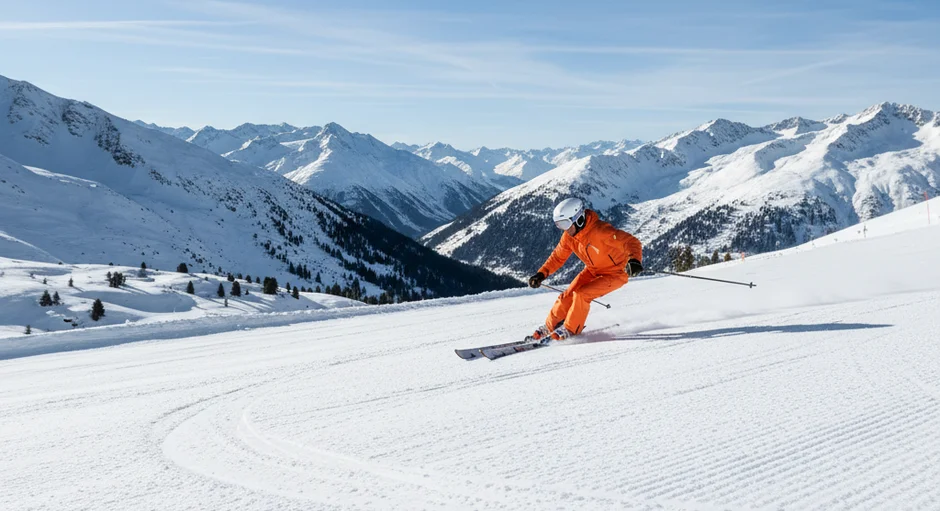
Carving skiing uses the ski's sidecut to create clean arcs through the snow, leaving precise lines rather than skidded tracks. The technique transforms skiing from controlled sliding into continuous, flowing turns where physics guides the ski through each arc.
At 1,800 metres in Graubünden, Arosa provides exceptional carving terrain across 225 kilometres of skiable runs. The resort's reliable snow conditions, consistent grooming, and varied terrain create ideal learning and practice conditions for carved turns. Professional instruction is available through multiple ski schools, with terrain suitable for all ability levels.
What Carving Skiing Is and Why It Matters
Carving engages the ski's edge throughout the entire turn, using the built-in sidecut to guide the ski through a precise arc. Unlike parallel skiing where skis skid slightly, carved turns maintain constant edge contact with the snow. The technique requires specific body positioning, timing, and commitment to the turn.
Modern carving skis feature pronounced sidecuts (typically 12-16 metre radius) and responsive construction that translates small movements into immediate edge engagement. The hourglass shape built into these skis enables the clean arcs that define proper carving technique.
The benefits include increased efficiency, reduced fatigue, better speed control, and smoother descents. However, mastering carving requires understanding edge angle, pressure distribution, and body positioning. Small adjustments create dramatically different results, making professional instruction valuable.
Learning Carving Technique in Arosa
The Schweizer Ski- und Snowboardschule Arosa offers specialized carving clinics throughout the winter season. These intensive sessions progress from basic edge engagement on gentle terrain to advanced techniques on steeper runs. Private lessons include video analysis to help students understand turn mechanics.
The Hörnli area provides ideal intermediate carving terrain. Runs like Hörnligrat offer sustained moderate pitches with excellent snow preparation. Grooming crews maintain surfaces specifically suited for edge work, creating firm, even conditions that carving requires. Morning sessions work best when overnight grooming produces fresh corduroy.
Advanced carvers use the steeper terrain on Weisshorn, where runs like Weisshornhang allow for longer, more dynamic arcs. The pitch demands complete commitment—once you initiate a carved turn on steep terrain, you must follow through completely.
Beginner carvers practice on wide blue runs in the Tschuggen area, where gentle pitches and forgiving terrain allow experimentation. Intermediate skiers progress to red runs on Hörnli for longer carved sequences. Advanced skiers explore challenging Weisshorn terrain where steep pitches test refined technique.
Practical Details for Your Carving Experience
The carving season runs December through April, with optimal conditions January through March. Arosa's elevation ensures reliable snow conditions while grooming standards create the firm surfaces carving requires. Daily overnight grooming provides fresh corduroy for early-morning sessions.
Equipment Requirements:
- Modern carving skis with pronounced sidecuts
- Properly fitted boots for precise energy transfer
- Current models available at local rental shops
Instruction Costs:
- Group carving clinics: CHF 80-120 per person (2 hours)
- Private lessons: CHF 150-200 (2 hours)
- Single intensive sessions often accelerate progress significantly
Terrain Access:
- Beginners: Wide blue runs in Tschuggen area
- Intermediate: Red runs on Hörnli with sustained pitches
- Advanced: Steep terrain on Weisshorn for dynamic arcs
How to Access Carving Terrain from Altein Hotel Arosa
Altein Hotel Arosa sits within walking distance of the resort's main lift system. The Weisshorn gondola, accessing premium carving terrain, is just minutes from the hotel. This proximity allows flexible scheduling—easy returns for lunch or equipment adjustments before afternoon sessions.
The hotel's central Arosa location provides equal access to all three main ski areas:
- Hörnli chairlift: Excellent intermediate carving terrain
- Tschuggen area: Ideal for learning basic technique
- Weisshorn: Advanced carving challenges
Equipment rental and ski school meeting points concentrate near main lifts, all within easy reach. This eliminates logistical complications—you're never more than minutes from lesson meeting points or equipment pickup.
Perfecting Your Carving Technique
Successful carving requires several key principles:
Edge Engagement: Roll the ski onto its edge gradually rather than forcing it. Progressive engagement creates smooth turn initiation.
Pressure Distribution: Maintain even pressure along the ski's length. Avoid tail-heavy stance that many skiers develop.
Body Positioning: Follow the ski's arc rather than fighting it. Your body should complement the turn, not force it.
Commitment: Hesitation leads to incomplete edge engagement and skidded turns. Trust the equipment and technique to create clean arcs.
Practice progression follows a structured sequence:
- Gentle edge engagement on easy terrain
- Focus on ski tracking without skidding
- Progress to steeper terrain and higher speeds
- Link carved turns in different radii
- Create flowing sequences down varied terrain
Weather significantly affects carving practice. Firm, groomed snow provides optimal conditions. Soft or choppy snow makes edge engagement difficult. Cold temperatures maintain firm surfaces, though extremely cold conditions can make snow too hard for comfortable practice.
The unparalleled skiing in Arosa Lenzerheide extends beyond carving to encompass all skiing aspects, from gentle learning slopes to challenging off-piste terrain.
Beyond Basic Carving
Advanced carving variations include:
Racing-Style Carving: Emphasizes maximum edge angles and aggressive turn initiation, creating dramatic turns with significant g-forces.
Recreational Carving: Focuses on flow and efficiency using moderate edge angles for smooth, sustainable descents.
Terrain Applications:
- Steep terrain requires greater commitment and precise timing
- Variable snow conditions test adaptability
- Bumps and terrain features challenge maintaining carved turns
The edge control developed through carving improves performance in all skiing conditions. Precise timing and body awareness transfer to alpine skiing in challenging conditions. Even off-piste skiing benefits from improved edge control.
After intensive carving sessions, muscles used for precise edge control benefit from recovery. The spa facilities at Altein Hotel Arosa provide targeted relief for specific muscle groups that carving engages. This combination of technical instruction and recovery amenities creates ideal conditions for rapid skill development.
Arosa's groomed runs, with consistent surfaces and varied pitches, provide an exceptional carving classroom. The resort's terrain offers appropriate challenges for every level. Combined with Altein Hotel Arosa's convenience—short walks to lifts mean more mountain time—a carving-focused holiday becomes both technically rewarding and thoroughly enjoyable. The hotel's amenities provide perfect recovery environments for reflecting on each day's technical progress.
Frequently Asked Questions
Where can you go carving in Arosa?
Arosa has 225 km of groomed runs suited to carving, across three ski areas. Tschuggen: wide blue runs, ideal for your first carved turns. Hörnli: red runs like Hörnligrat with sustained, moderate pitch for intermediates. Weisshorn: steeper runs like Weisshornhang for advanced, dynamic arcs. All three areas are reachable from Altein, Arosa within minutes.
Is Arosa good for carving skiing?
Yes. Arosa sits at 1,800 m with reliable snow from December to April. 225 km of skiable runs with daily overnight grooming. Fresh corduroy each morning gives the firm, even surface carving needs. Terrain covers every level, from gentle blues to steep reds.
Can you take carving lessons in Arosa, and what do they cost?
Yes. The Schweizer Ski- und Snowboardschule Arosa runs carving clinics all winter. Group carving clinics: CHF 80 to 120 per person for 2 hours. Private lessons: CHF 150 to 200 for 2 hours. Private lessons include video analysis of your turns. Sessions progress from edge basics on gentle terrain to steeper runs.
When is the best time for carving in Arosa?
The carving season runs December to April. Best conditions are January to March. Early morning is ideal, on fresh overnight corduroy. Firm, groomed snow gives the cleanest edge grip; soft afternoon snow makes carving harder.
How far is Altein, Arosa from the carving slopes?
The Weisshorn cable car is about 250 m from Altein, Arosa (roughly a 3-minute walk). A free ski bus also serves the lift areas. All three ski areas (Tschuggen, Hörnli, Weisshorn) are within easy reach. The short walk to the lifts means easy returns for lunch or an equipment change.