.webp)
Nietzsche's Sils Maria: the literary walk
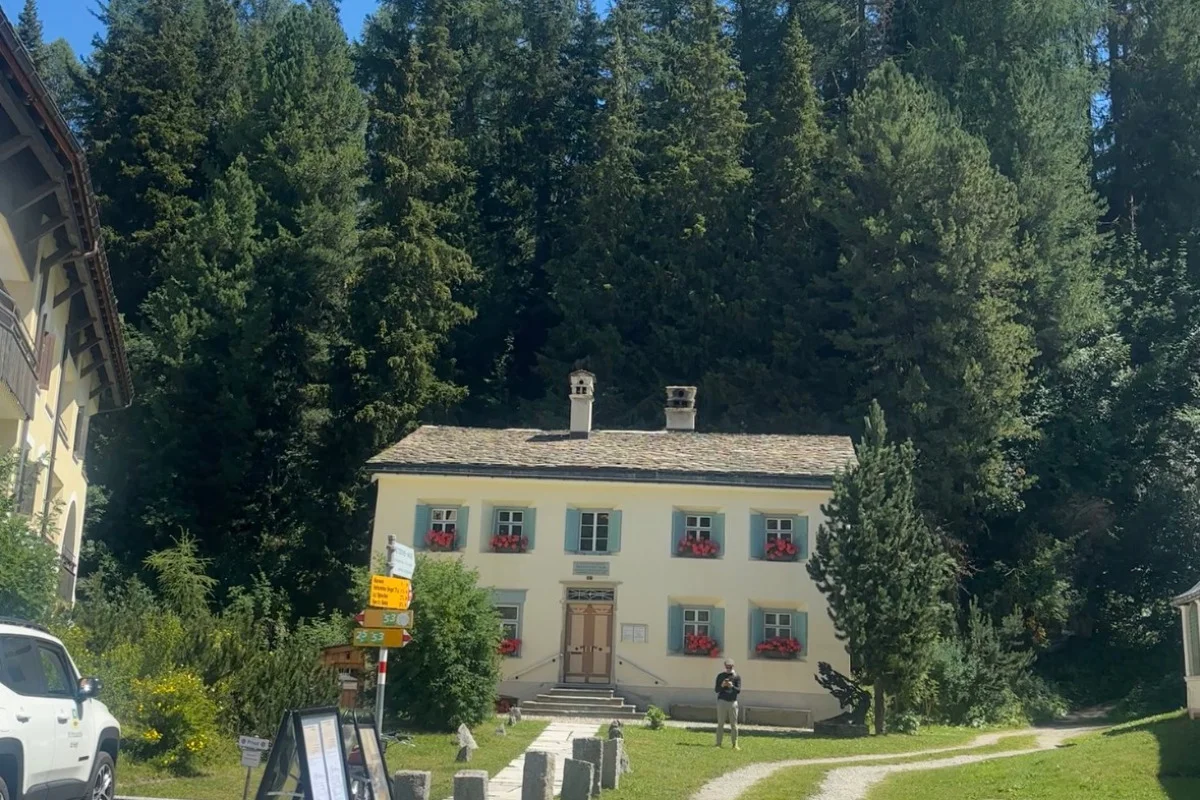
Most lists of Sils Maria Sehenswürdigkeiten open with the lake, the larches and the cable car to Furtschellas, and all of that is worth your time. The reason people keep coming back, though, is smaller and quieter: a low room above a village street where Friedrich Nietzsche spent seven summers, and the paths he walked for five to seven hours a day while he was working. Those paths still exist. They are signposted, mostly flat, and you can join the important ones together in an afternoon on foot from the village. This is a walking guide to that literary Sils, with the facts checked and the mythology kept in its place.
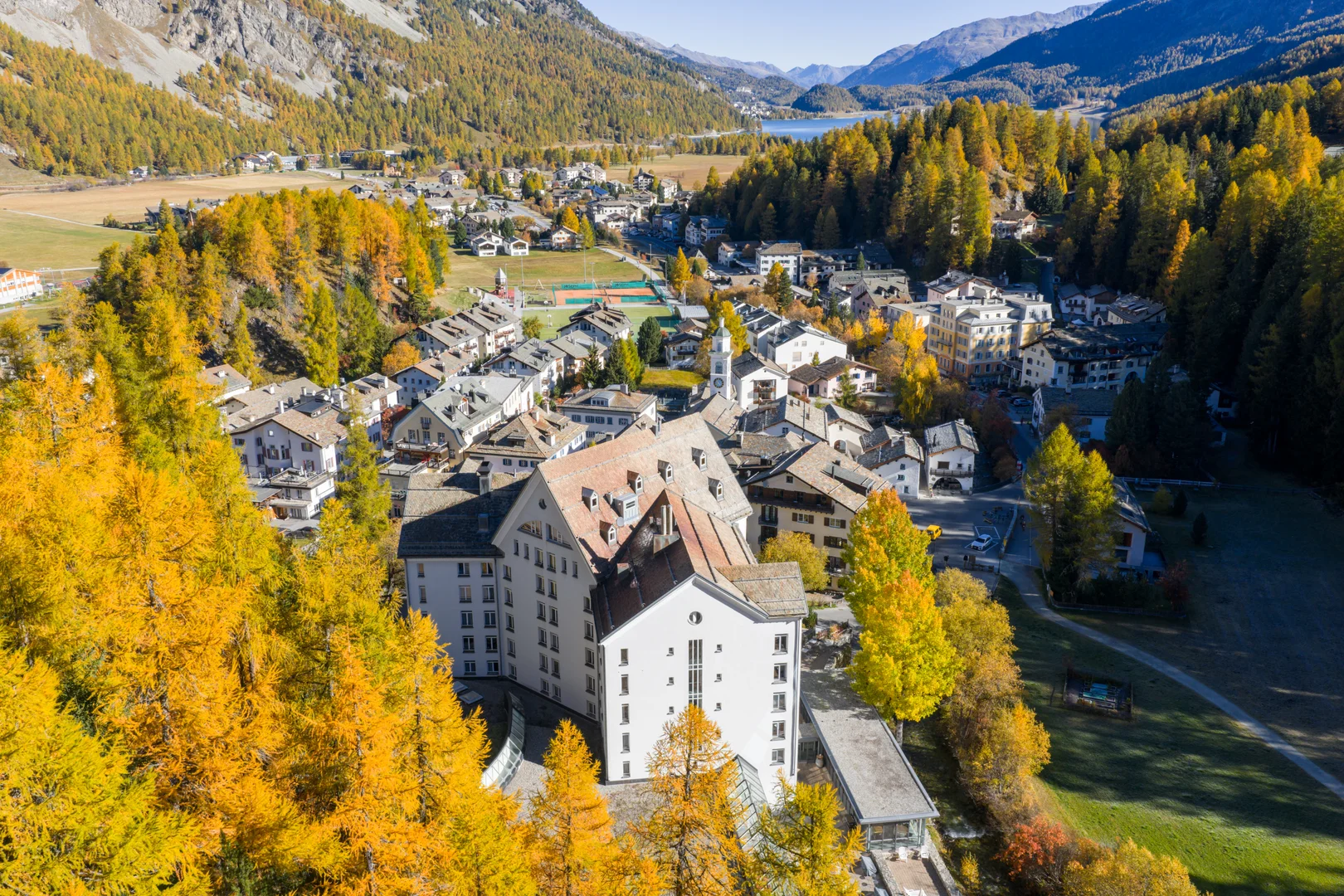
Why Nietzsche came here
Nietzsche arrived in Sils Maria in early July 1881, after an unsuccessful stay at Recoaro in northern Italy. He was looking for air that would not trigger the migraines that had ended his professorship in Basel, and the dry, bright, high plateau of the Upper Engadin suited him. He stayed that summer and then returned for every summer from 1883 to 1888, seven in all, always to the same modest rented room in the house of the Durisch family. The Nietzsche-Haus quotes him writing that here he felt better than anywhere else on earth.
The work he did in Sils is the reason the Sils Maria Nietzsche connection is more than a plaque. The second part of Thus Spoke Zarathustra was written here in 1883, and the third was drafted in the same summer. Notes towards Beyond Good and Evil followed in 1885, the prefaces to his earlier books in 1886, On the Genealogy of Morals in July 1887, and Twilight of the Idols and The Antichrist in 1888. He left Sils for the last time on 20 September 1888, a few months before his collapse in Turin.
The Nietzsche-Haus, in the middle of the village
The Nietzsche-Haus in Sils is not a grand museum and does not pretend to be. It sits at Via da Marias 67, about five minutes on foot from the village square, in the building where he lodged. Inside are five permanent exhibition spaces: his early life and the Basel years including the Wagner friendship, the years of independent philosophy up to 1900, a room on how his work was received through the collections of Oscar Levy and Mazzino Montinari, furniture from his Basel household, and his own rented room, preserved as he kept it, down to the wallpaper he picked out in 1883. There is also a research library holding one of the largest multilingual Nietzsche book collections anywhere, and space for changing exhibitions.
The museum opened on 25 August 1960, the sixtieth anniversary of Nietzsche's death.
Planning your visit
The house opens for a summer season and a winter season, with a closed period between them, and it receives visitors Tuesday to Sunday in the afternoon only. Mondays are closed. Because the exact dates and admission prices change from year to year, check nietzschehaus.ch before you set out rather than relying on any published summary, and allow about an hour inside. Small groups are best; the rooms are narrow.
The lakeside path to the Chastè peninsula
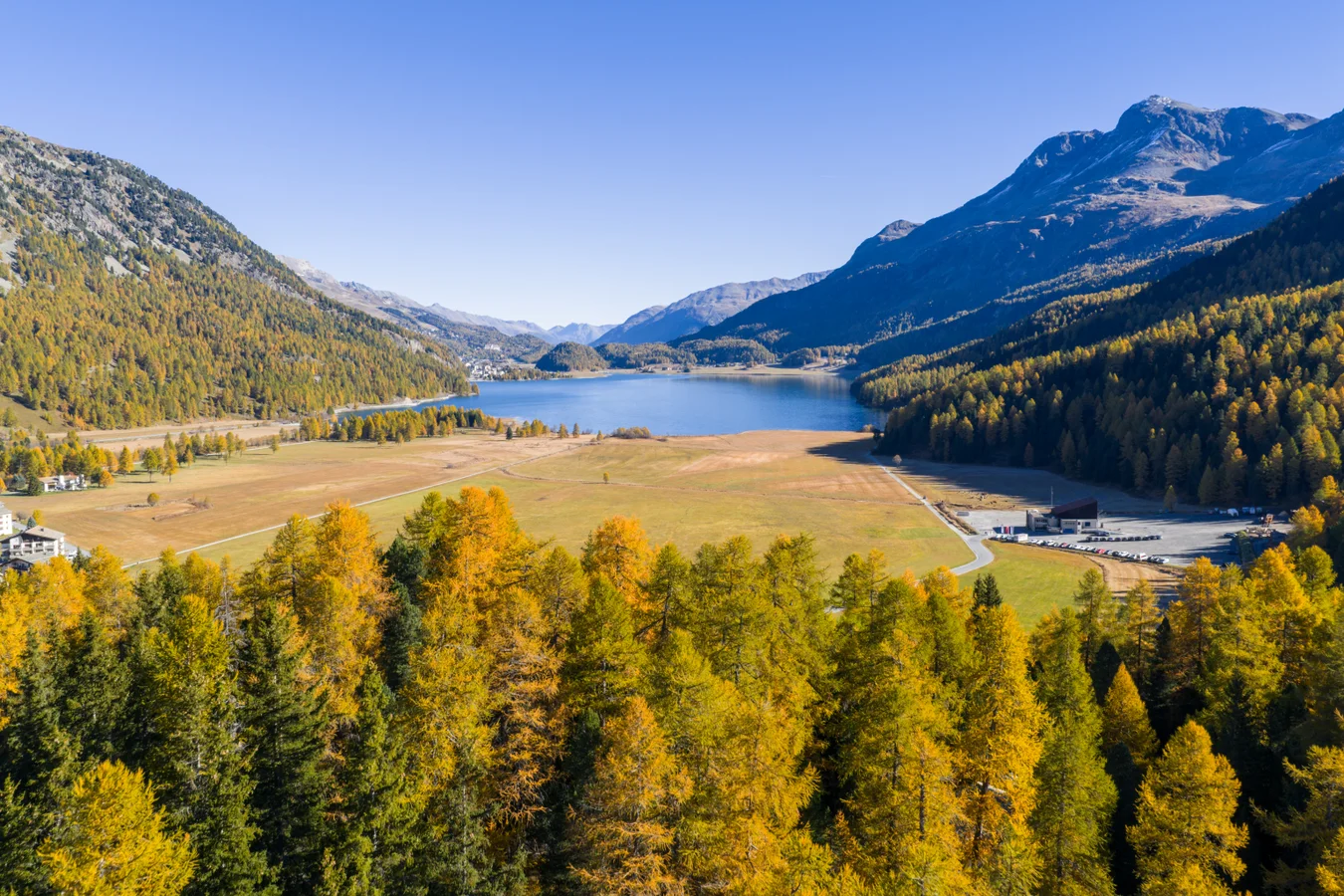
From the village, the most rewarding of all the things to see in Sils Maria is a wooded spit of land that pushes out into the Silsersee. Chastè means castle in Romansh, and the stone foundations of a medieval castle survive on its northern shore. Sils Tourismus records that Nietzsche called it the most beautiful place in the Engadin, and there is a memorial stone to him at the far end of the peninsula.
The standard circuit from Sils is about 4.4 kilometres, takes roughly one hour and fifteen minutes, and climbs only around 50 metres, with a high point of 1,835 metres. It is rated easy and about half of it runs on soft path through larch wood. Benches appear at intervals, deliberately. The peninsula is a protected natural area, so stay on the marked trails.
Go in late September or early October if you can choose. The larches turn amber, the lake holds the colour, and in some years the wind rolls fallen larch needles into the drifting spheres locals call Silserkugeln. If you want more of the same at an easier gradient, the easy panoramic walks around the village cover the balcony routes above the valley floor.
The Nietzsche stone near Surlej
The Nietzsche stone at Surlej lies on the shore of the neighbouring lake, the Silvaplanersee, at roughly 1,791 metres, a pyramidal block of rock a short walk from the Surlej bridge. Reaching it from Sils Maria is easiest by Engadin Bus to the Surlej bridge stop and then about fifteen minutes on foot; walkers can also follow the lakeside route between the two lakes and continue on.
This is where care is needed. What is documented is Nietzsche's own account in Ecce Homo, which dates the idea of eternal recurrence to August 1881 and places it on a walk through the woods beside Lake Silvaplana, beside a pyramidal block of stone not far from Surlej; he called the idea the basic conception of Thus Spoke Zarathustra. What is local tradition, maintained by Silvaplana and by Sils Tourismus, is the identification of this particular boulder as that rock. Treat the marked stone as commemoration rather than proof. That does not make the visit less worthwhile: it is a short, level walk to a good place to sit, with the Corvatsch massif above you and the lake in front.
Val Fex and the quieter half day
If you have a second morning, walk into Val Fex, the side valley that opens directly behind Sils Maria. It is closed to general traffic apart from residents' vehicles, which is why it stays as quiet as it does, and horse-drawn carriages run up from the village for anyone who would rather ride in one direction and walk back. It is a valley of scattered hamlets, hay meadows and a view of the Fex glacier at the head, and it makes an obvious counterweight to a morning spent indoors reading exhibition labels.
The rest of the literary village
Nietzsche is not the only name in the Sils story. Hermann Hesse was among the writers who came, and Annemarie Schwarzenbach, the Swiss author, travel writer and photographer, lived in Sils from 1935 until her death here in 1942 after a bicycle accident. The Nietzsche-Haus regularly devotes its temporary exhibition space to these wider Engadin connections, which is a good reason to look at the current programme even if you have visited before.
Making a day of it from the hotel
Sils Maria sits at just over 1,800 metres between two lakes, which is what makes this itinerary work on foot. A sensible order is the Nietzsche-Haus in the afternoon when it opens, the Chastè circuit before or after, and the Surlej stone on a separate half day combined with the bus. For a longer stay, our four-day long weekend in Sils Maria sets the same walks alongside the lakes, the passes and the Engadin villages, and the guide to how to reach Schweizerhof, Sils Maria covers the train through Chur and St. Moritz as well as the drive over the Julier.
Schweizerhof, Sils Maria, a Faern Collection Hotel, stands on Via da Fex at the edge of the village, minutes from the lake path and the entrance to Val Fex. If you would like to read Zarathustra where it was written, and then walk off the afternoon before dinner, this is the address to do it from.
Prices, opening times and season dates in this article were correct when it was written and are not updated continuously. Please check the current details with the operator or on the official website before you travel.