.webp)
Skiing in Wengen
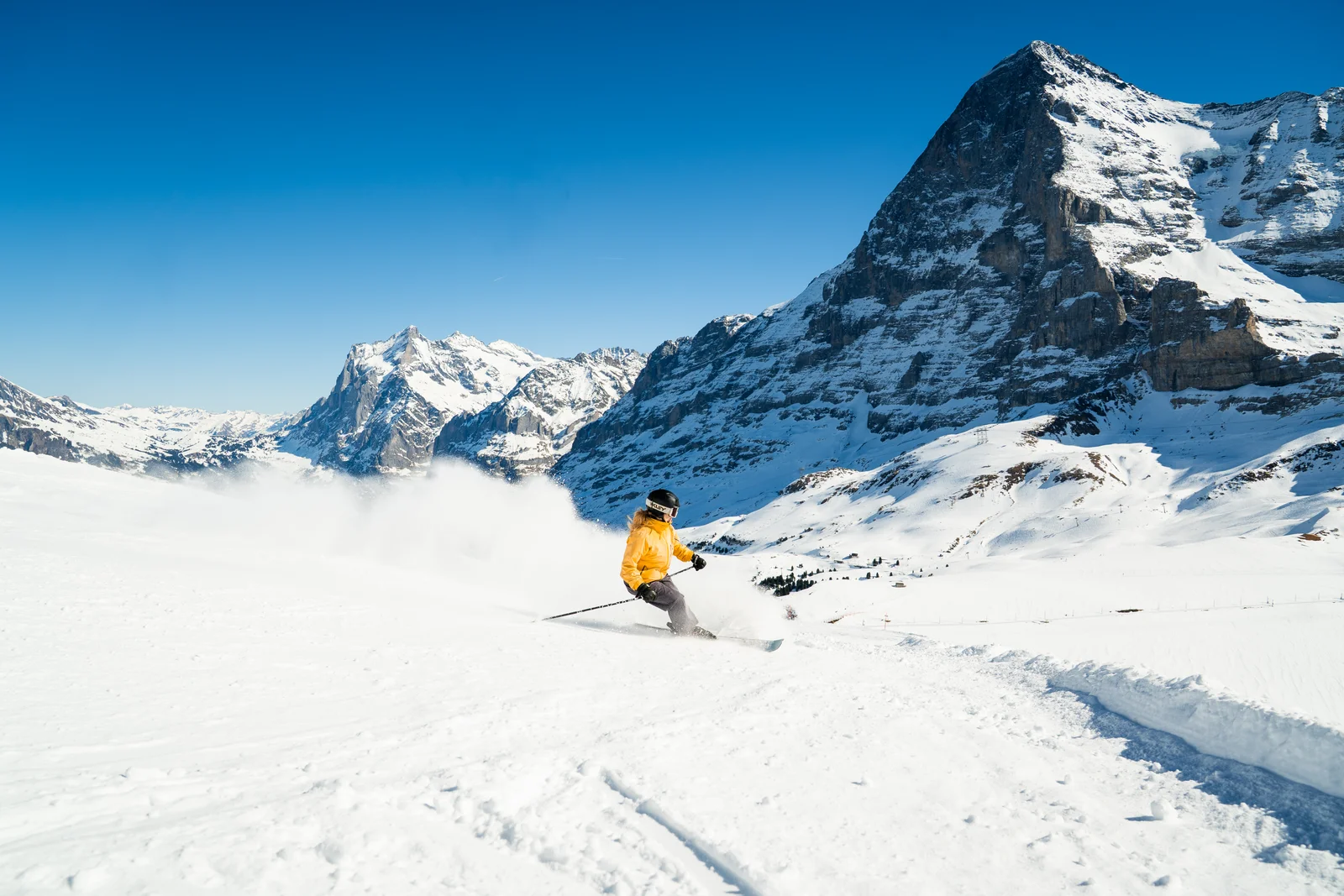
Skiing in Wengen means a car-free base beneath the Eiger, Mönch and Jungfrau, the whole Jungfrau Ski Region on one pass, and the most famous downhill in ski racing running right past the village. Wengen sits at 1,274 m (4,180 ft) on its sunny shelf above the Lauterbrunnen valley, and while the village itself is low, the slopes above it are high, wide and reliably white. This is a place to ski by day and let the trains and cable cars do the driving.
The ski area
Wengen skis into the Kleine Scheidegg to Männlichen sector, the shared arena above Wengen and Grindelwald. That sector alone offers around 100 km of pistes served by more than 20 lifts, and it plugs into the wider Jungfrau Ski Region, which links Grindelwald, Wengen, Grindelwald First and Mürren-Schilthorn for well over 200 km of runs on a single pass. The terrain leans intermediate, with long cruising reds making up more than half the network, a generous share of easy blues, and a smaller set of genuine blacks for stronger skiers.
The spread of runs suits a real range of skiers, but the quiet advantage here is height. The village may sit at 1,274 m, yet the pistes climb well above 2,300 m, and the connected region rises higher still. Because the skiing happens up high while you sleep down low, snow cover on the mountain stays dependable deep into the season, and the top terrain often runs to the end of April.
The Lauberhorn
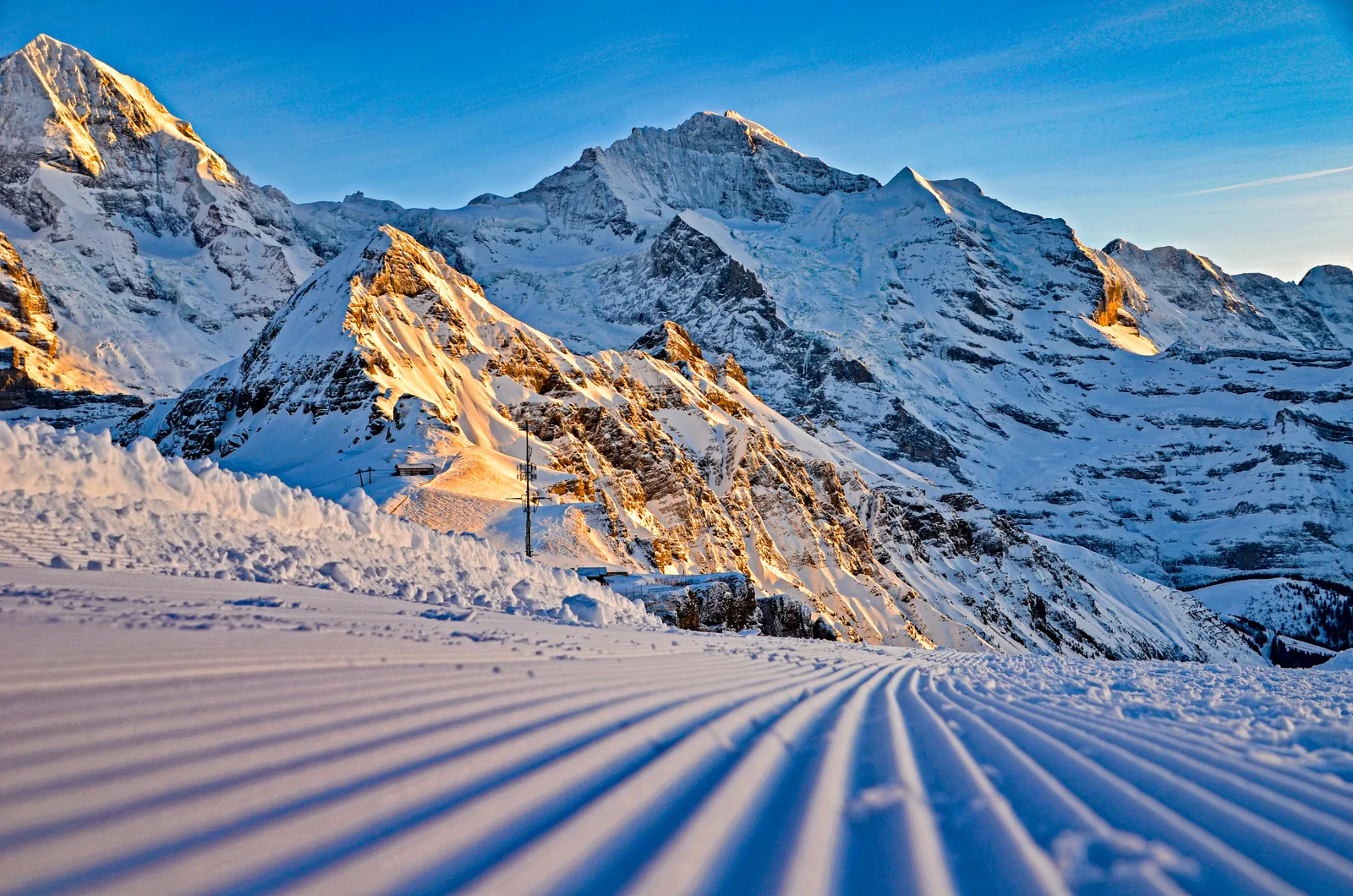
Every January the World Cup circus arrives for the Lauberhorn races, and Wengen becomes the centre of the ski-racing world. The Lauberhorn downhill is the longest course on the circuit at about 4.5 km, dropping more than 1,000 m of vertical from start to finish above Wengen. Racers reach the valley in well over two minutes, an age in a sport usually measured in the low ones.
The Hundschopf and a speed record
The course is a catalogue of famous names. The Hundschopf is its signature, a jump where skiers launch off a rock edge and thread a narrow gap in the cliff, and it is the image most people picture when they think of the Lauberhorn. The race also holds a startling record: in 2013 Johan Clarey was timed at 161.9 km/h on the run, long cited as the fastest speed clocked in a World Cup downhill. You do not have to ski any of this to enjoy it. The public runs share the mountain, and standing where the racers fly is part of the appeal of a winter here.
Getting from a car-free village to the snow
Because Wengen is car-free, you reach it by the cog railway from Lauterbrunnen, and you reach the slopes the same unhurried way. Two lifts lift you out of the village. The Männlichen aerial cableway climbs from the edge of Wengen at 1,247 m up to 2,229 m (7,313 ft) in a few minutes, opening the Männlichen side. The Wengernalpbahn, the same cog railway you arrived on, carries on up to Kleine Scheidegg at 2,061 m (6,762 ft), the hub between the Wengen and Grindelwald sectors and the foot of the Jungfraujoch line.
It is worth being clear about one thing: Wengen is a valley-base village, not a slopeside one. The pistes sit above the village rather than at its doorstep, so your ski day starts and ends with a short lift or train ride rather than a click straight out of the door. In a car-free resort that trade is an easy one to make, and the ride up with coffee in hand is no hardship.
Who the slopes suit
The Männlichen side is the gentler half, with wide, sunny cruising runs, a children's area near the top and easy terrain that flatters improvers and families. The Kleine Scheidegg and Lauberhorn side is where the mountain bares its teeth, with steeper pitches and the black runs that stronger skiers come for. Because the two sides connect, a mixed group can split by ability in the morning and still meet for lunch on the same ticket.
Pass, rentals and ski school
One pass, the Jungfrau Ski Region ski pass, covers all three linked areas, including the Lauberhorn run itself, so you are never limited to a single sector. If you are new to the slopes or bringing children, the Swiss Ski and Snowboard School Wengen runs group and private lessons in the village, and rental shops fit you out a short walk from the lifts. The season runs roughly December through April, with the high, snow-sure terrain holding on longest at either end.
The car-free difference, and the après
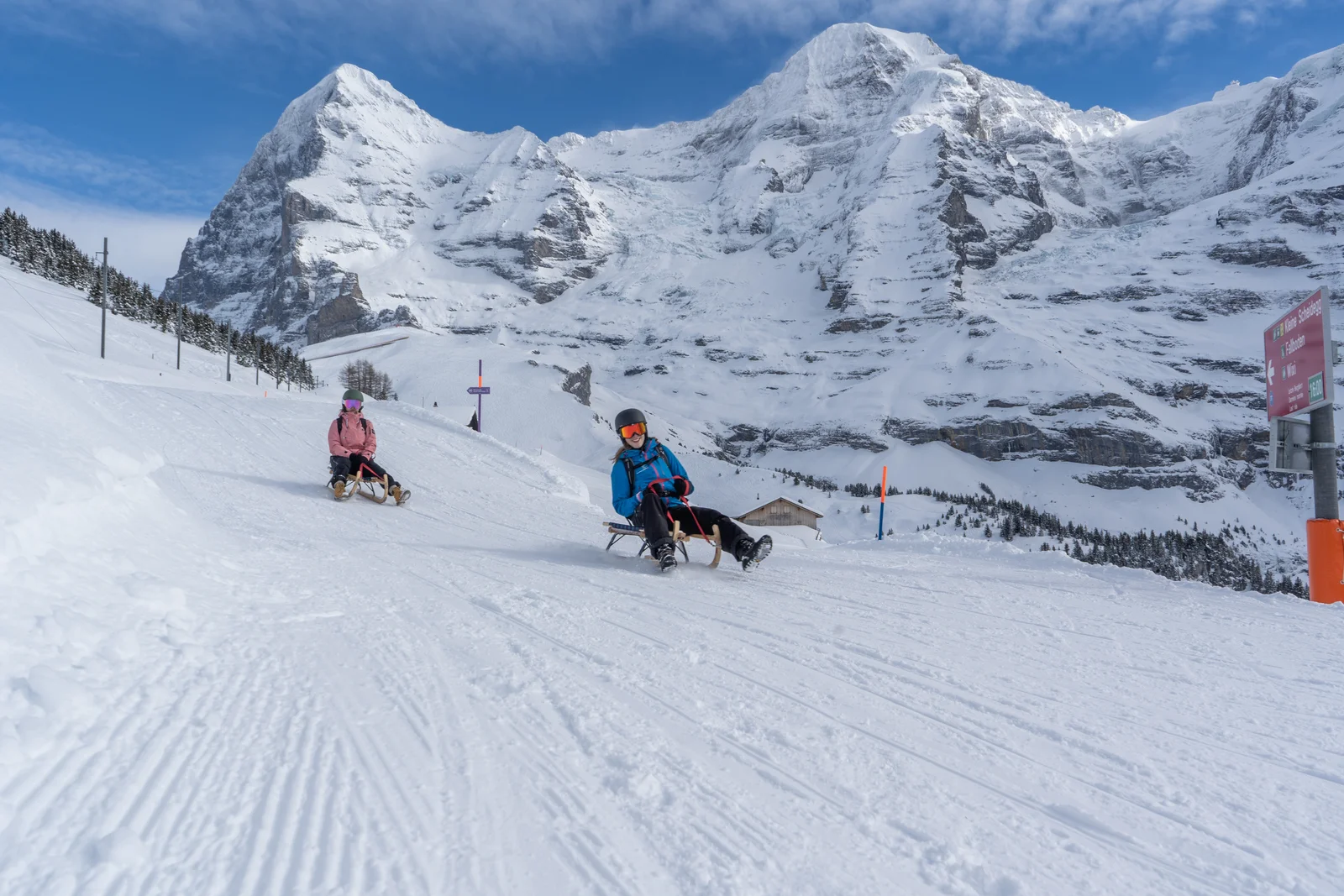
The best part of skiing in Wengen reveals itself when the lifts close. There is no road, no traffic and no queue of cars, just a quiet Alpine village where you walk everywhere. The winter days off the slopes are full: an ice rink for skating and curling, more than 20 toboggan runs across the region including the Fox Run alongside the Lauberhorn course, and the marquee Lauberhorn race weekend that draws tens of thousands and defines the village's social calendar.
After a day on the mountain, Victoria Lauberhorn, Wengen, a Faern Collection Hotel, sits about 50 metres from the station as your ski base. Ease tired legs in the spa and indoor pool, then settle in for the evening among the restaurants and bars of the village. For everything else a Wengen winter holds beyond the pistes, our guide to things to do in Wengen in winter is the place to start.
Make Wengen your ski base
Skiing in Wengen gives you high, dependable snow, a legendary race course on your doorstep and the rare calm of a car-free village to come home to. Come and ski the Jungfrau Ski Region with us in Wengen, and let the trains carry you to the snow and back.
Prices, opening times and season dates in this article were correct when it was written and are not updated continuously. Please check the current details with the operator or on the official website before you travel.