.webp)
The Jungfrau Region in summer: Grindelwald, Lauterbrunnen, Mürren and Jungfraujoch from Wengen
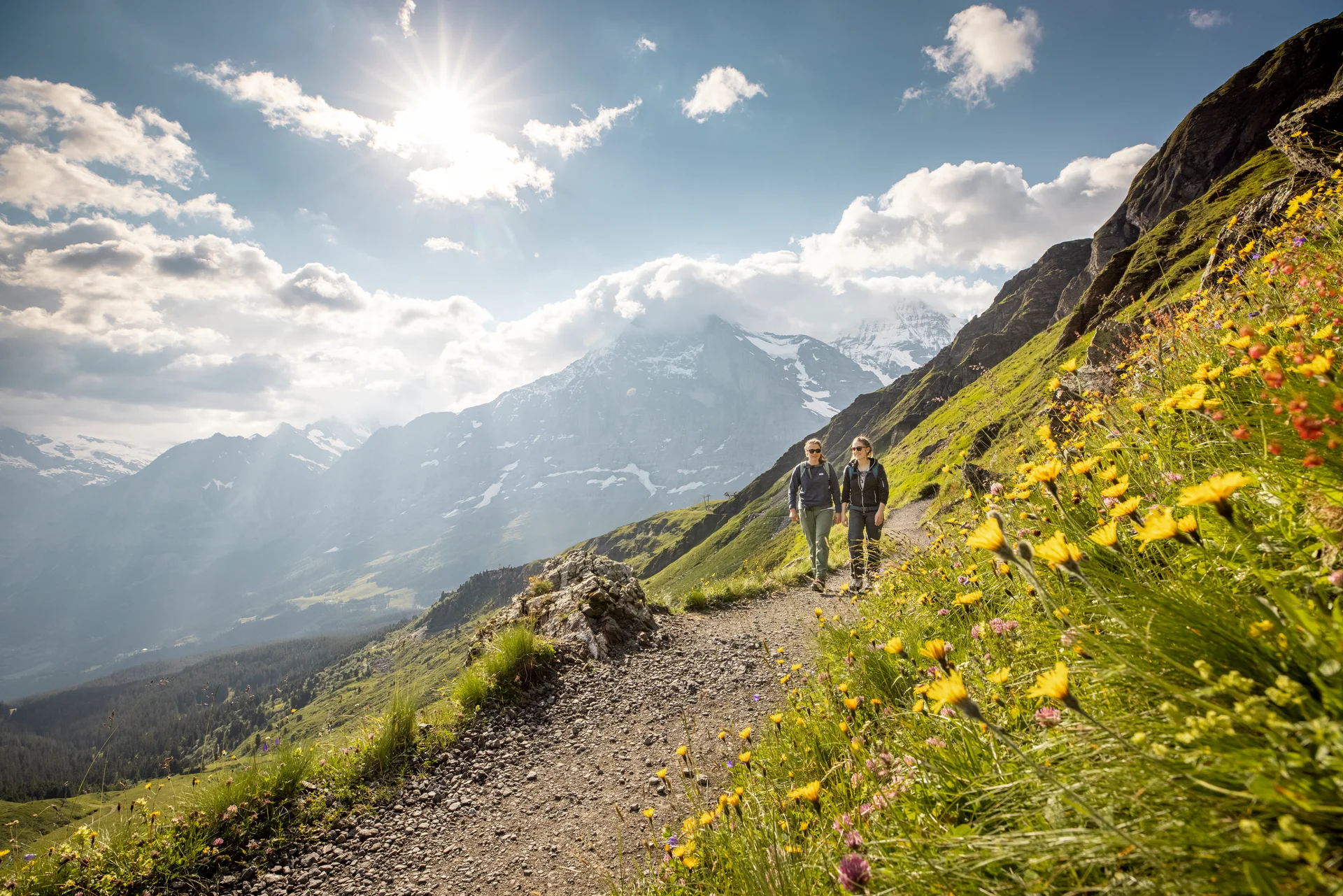
The Jungfrau Region in summer is two parallel valleys, four car-free villages and a dozen railways and cableways, and from Wengen almost all of it is a day trip. This guide is organised by place: the Lauterbrunnen valley, Mürren and the Schilthorn, Grindelwald, the passes at Kleine Scheidegg and Männlichen, Jungfraujoch, and Interlaken with its two lakes. Each section gives route, pass and timing. For the village itself, see our list of things to do in Wengen.

Getting around the region from Wengen
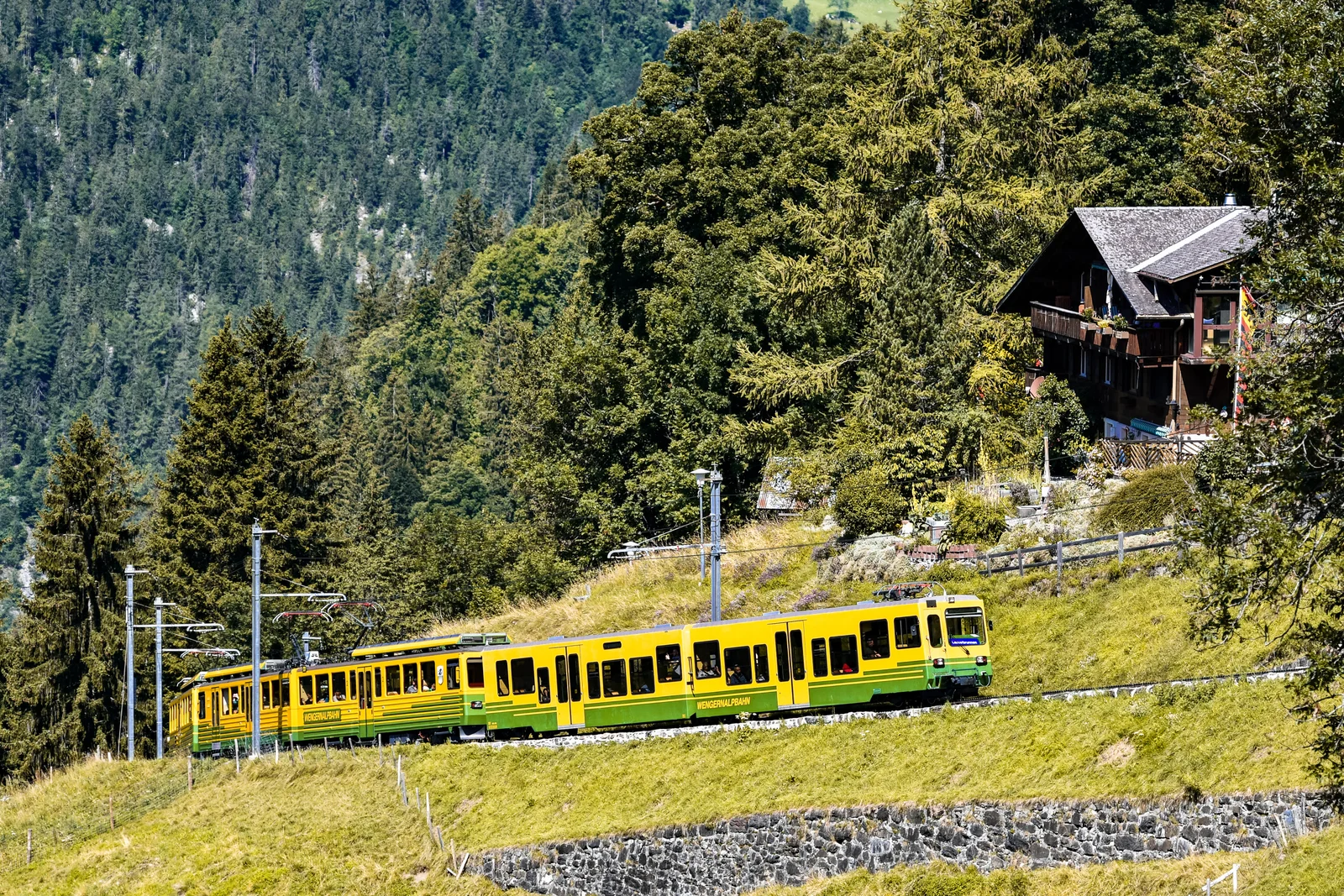
Wengen sits at 1,274 metres on a shelf above the valley and has no road in. Everything runs on the Wengernalp Railway, the longest continuous rack railway in the world at just over 19 kilometres, which climbs from Lauterbrunnen through Wengen to Kleine Scheidegg and drops down the far side into Grindelwald. Trains run twice an hour and take about 12 minutes down to Lauterbrunnen, the hub where the Interlaken trains, the Mürren cableway and the valley PostBus all start, and where you park if you drive. More in how to get to Wengen.
Trains from Interlaken split at Zweilütschinen, so sit in the front half for Lauterbrunnen. Timetables are on sbb.ch. The two biggest days out have their own pages, the Jungfraujoch excursion and the Lauterbrunnen valley.
The Lauterbrunnen valley: Staubbach, Trümmelbach and Stechelberg
- From Wengen: 12 minutes down by Wengernalp Railway, twice an hour. PostBus 141 carries on to Trümmelbach and Stechelberg.
- What covers it: both passes include the train and the valley bus. Trümmelbach is priced separately, about CHF 18 for adults, CHF 8 for children aged 6 to 15.
- Best time of day: early for the Staubbach, while the west wall is in shade. Trümmelbach is loudest in the afternoon.
- One thing to know: Trümmelbach opens early April to early November, 9am to 5pm, and 8.30am to 6pm in July and August.
This glacial trench carries 72 waterfalls. The Staubbach is the one you see from the train: 297 metres of free fall beside the village, the highest free-falling waterfall in Switzerland, and free to visit. A gallery cut into the rock takes you behind the water from roughly May to October.
The Trümmelbach is the opposite, ten glacier-fed falls corkscrewing inside the mountain, reached by a tunnel lift, up to 20,000 litres a second at full melt. Beyond it the road ends at Stechelberg. Both are covered in the Lauterbrunnen waterfalls from Wengen.
Mürren and the Schilthorn
- From Wengen: down to Lauterbrunnen, then the cableway to Grütschalp and the shelf railway to Mürren, about 20 minutes. Allow 45 minutes door to door.
- What covers it: both passes cover Lauterbrunnen to Mürren in full. Above Mürren the Jungfrau Travel Pass gives 25 per cent off the Schilthorn cableways; the Berner Oberland Pass covers them.
- Best time of day: the first cars up. Cloud builds on the Schilthorn from late morning.
- One thing to know: the Lauterbrunnen to Grütschalp cableway reopened on 11 July 2026 after a renewal, with a new 135-person cabin.
Mürren, at 1,638 metres, is Wengen's opposite number across the valley: car-free, smaller and quieter, with the Eiger, Mönch and Jungfrau in front of it rather than above. A funicular runs up to Allmendhubel and its flower park.
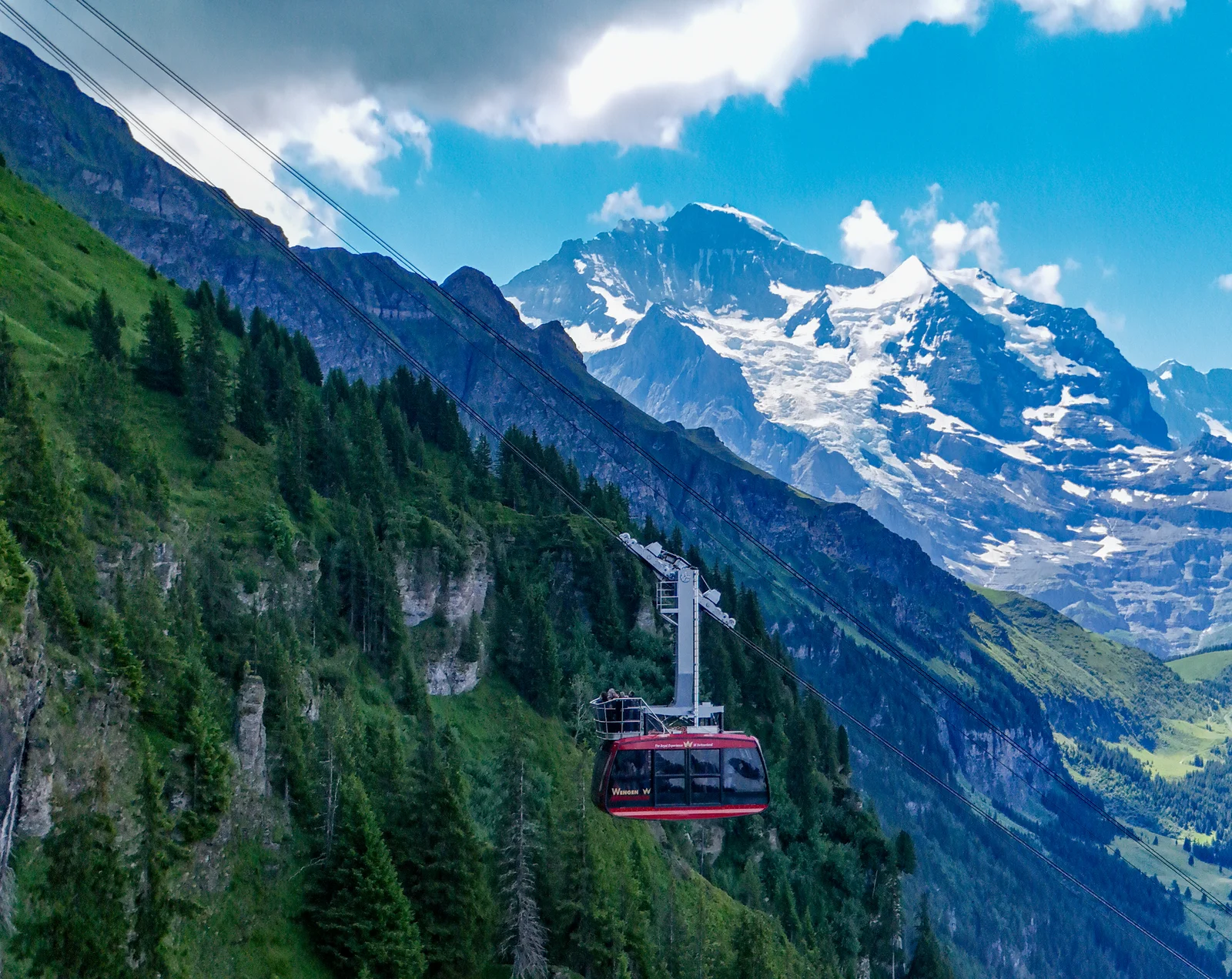
Above the village the cableway climbs through Birg to the Schilthorn at 2,970 metres, with the revolving Piz Gloria restaurant on the summit and the Thrill Walk at the middle station. The second way in is the PostBus to Stechelberg, about 30 minutes from Lauterbrunnen; up one way and down the other makes the better day. See our Piz Gloria excursion page.
Grindelwald: First, the Bachalpsee and Pfingstegg
- From Wengen: over the top, cable car to Männlichen in under five minutes then the 6.2 kilometre gondola down to Grindelwald in 19 minutes; or by rail over Kleine Scheidegg, roughly an hour.
- What covers it: the Jungfrau Travel Pass covers both routes and the First gondola, as does the Berner Oberland Pass, which adds Pfingstegg.
- Best time of day: the first gondola to First. The Bachalpsee mirrors the peaks only while the air is still.
- One thing to know: the First adventure package runs 13 April to 25 October 2026.
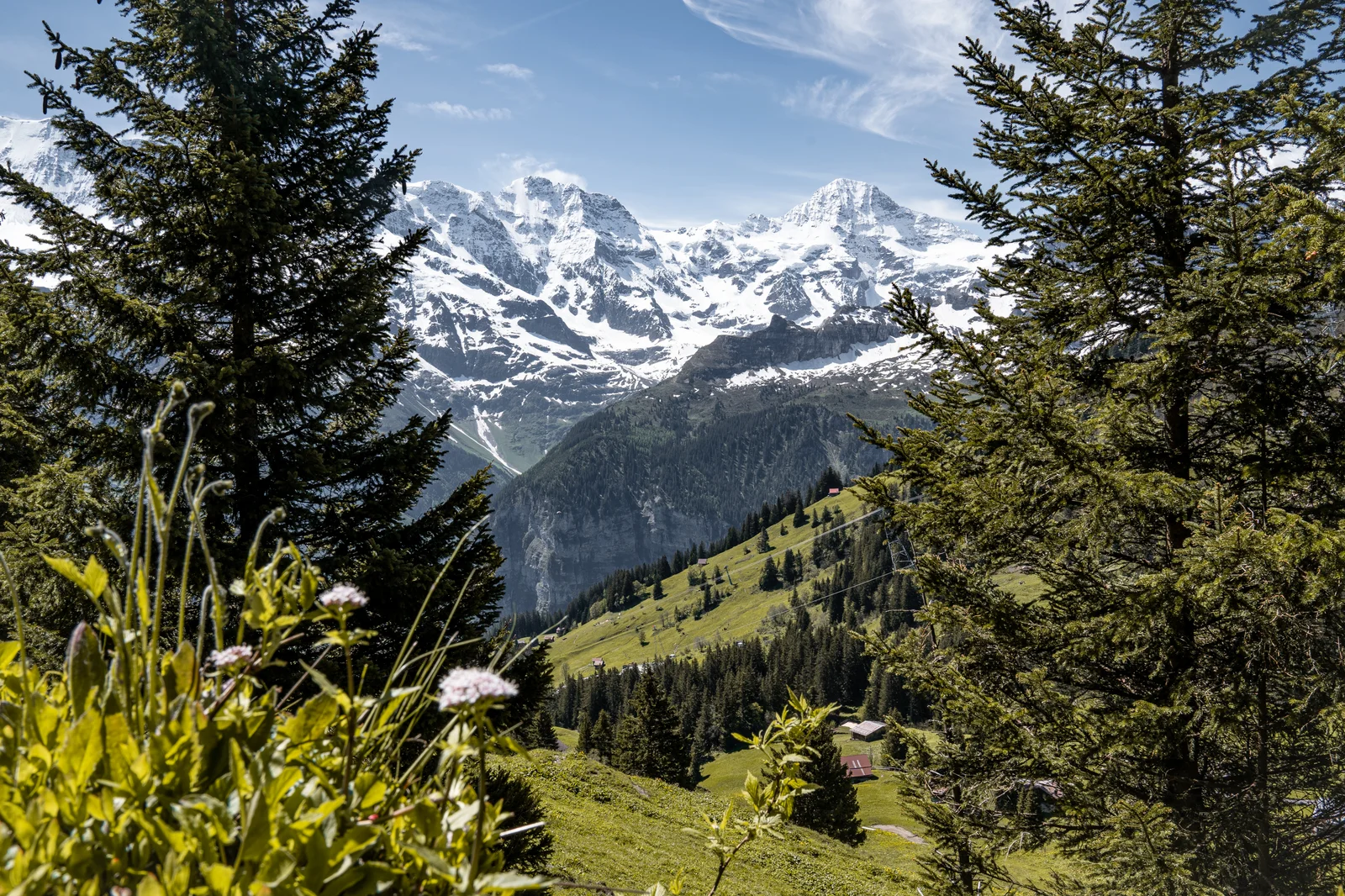
Grindelwald-First sits at 2,166 metres, 25 minutes above the village by gondola via Bort and Schreckfeld. A broad, well-made path reaches the Bachalpsee in under an hour. The summit also carries the First Cliff Walk, the First Flyer zip line, mountain carts and trottibikes: the best half day here for teenagers.
On the other side of Grindelwald, Pfingstegg is a short cable car to a sun terrace with a toboggan run and the Fly-Line, open daily from late April into October. Still choosing where to sleep? Our comparison of Grindelwald and Wengen as a base weighs both up.
Kleine Scheidegg and Männlichen: the passes between the valleys
- From Wengen: Männlichen by cable car from the village centre, just under five minutes and 947 metres of ascent to a station at 2,222 metres. Kleine Scheidegg by rail, about 30 minutes.
- What covers it: both are included in the Jungfrau Travel Pass and the Berner Oberland Pass. The Royal Ride, a seat on the roof of the cabin, is CHF 5 extra.
- Best time of day: the first cable car; you will have the ridge to yourself for an hour.
- One thing to know: the Wengen to Männlichen cable car runs 23 May to 25 October 2026.
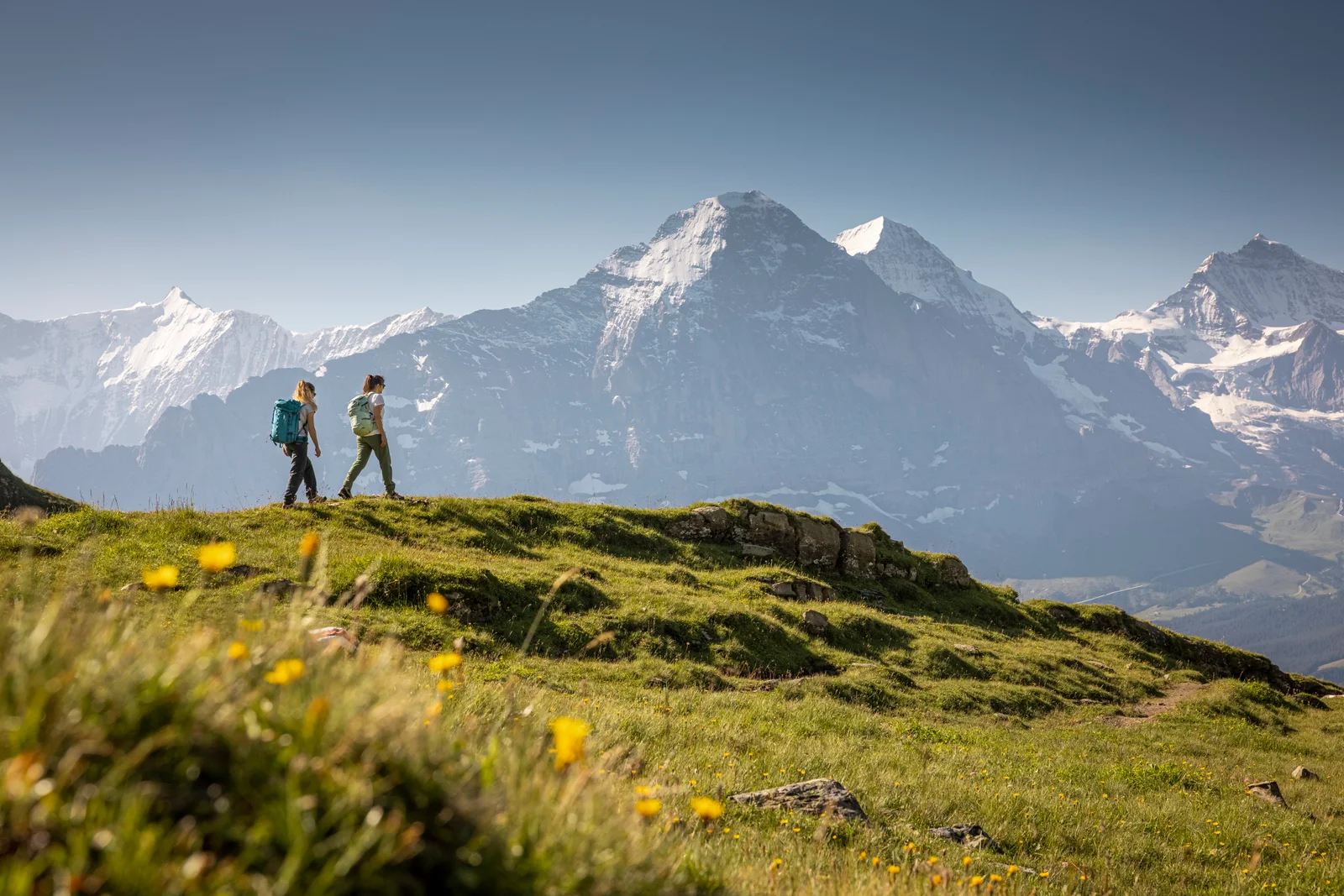
This ridge is the hinge of the region, and the reason Wengen works as a base: you are already halfway up it. From the Männlichen station the Royal Walk climbs about 30 minutes to the crowned summit platform, the Lauterbrunnen valley on one side and Grindelwald on the other. From there the Panorama Trail contours gently to Kleine Scheidegg at 2,061 metres with the Eiger north face ahead of you, and the train home leaves from the far end.
Jungfraujoch, in outline
- From Wengen: Wengernalp Railway to Kleine Scheidegg, then the Jungfrau Railway through the Eiger and the Mönch to the station at 3,454 metres.
- What it costs: with a Jungfrau Travel Pass the connecting ticket is CHF 89 from 1 May to 31 October 2026, seat reservation included, and from CHF 63 outside that window.
- Best time of day: the first departures, for the light and before cloud closes the view.
- One thing to know: a seat reservation is compulsory from 1 May to 31 October 2026.
Treat it as a full day and check the summit webcam first: in poor visibility there is little to see. Fares, timetables and altitude advice: how to visit Jungfraujoch from Wengen.
Interlaken and the lakes, as a half day
- From Wengen: about 37 minutes to Interlaken Ost by rail, changing at Lauterbrunnen.
- What covers it: the Jungfrau Travel Pass includes the trains and every boat on Lake Thun and Lake Brienz.
- Best time of day: afternoon. Go down when the mountain cloud comes in; the lakes are often still bright.
- One thing to know: Lake Thun boats run all year; the 2026 Lake Brienz season ran 3 April to early December.
Interlaken sits on the flat strip between the two lakes. Lake Thun boats leave from Interlaken West; the full circuit takes 4 hours 40 minutes, or Thun to Spiez is 50 minutes. Lake Brienz is the greener of the two. Boat one way, train back.
Why Wengen works as a base
Wengen is mid-mountain rather than valley floor, so each day starts above the traffic, on the first train up. Männlichen is five minutes away, Kleine Scheidegg thirty, Lauterbrunnen twelve, and the Jungfraujoch trains pass through. Where to stay in the Jungfrau Region sets out the trade-offs.
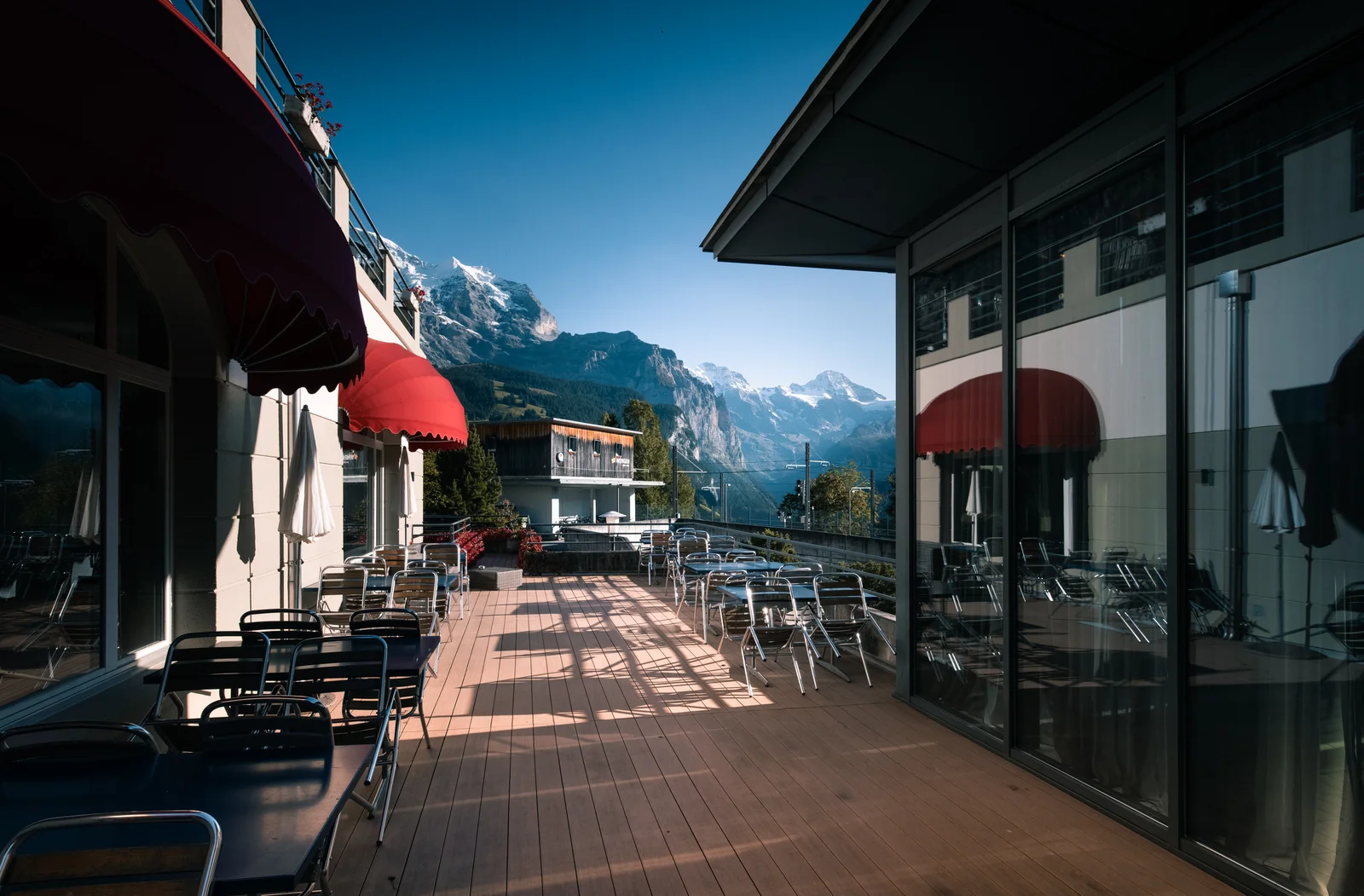
Victoria Lauberhorn, Wengen, a Faern collection resort, is a few minutes from the station, so everything above starts at the front door. Browse the rooms or the wider list of Wengen experiences.
FAQ
How many days do you need in the Jungfrau Region in summer?
Three full days covers the core: one on the Männlichen to Kleine Scheidegg ridge, one in the Lauterbrunnen valley, one for Jungfraujoch or the Schilthorn. Five days adds Grindelwald-First, Mürren and a lake, plus room for bad weather.
Is Wengen or Grindelwald the better base?
Wengen is quieter, car-free and higher, and puts you on the ridge in five minutes. Grindelwald is bigger and reaches First and the Eiger Express faster. Our comparison of Grindelwald and Wengen goes through it point by point.
Which pass is worth it for the Jungfrau Region?
For three or more days based here, the Jungfrau Travel Pass is usually the answer: CHF 210 for 3 days up to CHF 330 for 8 days in 2026, children aged 6 to 15 at a flat CHF 30. The Berner Oberland Pass costs CHF 240 for 3 days but covers the Schilthorn outright. The Swiss Half Fare Card, CHF 150 for a month, suits a longer Swiss tour.
Prices, opening times and season dates in this article were correct when it was written and are not updated continuously. Please check the current details with the operator or on the official website before you travel.